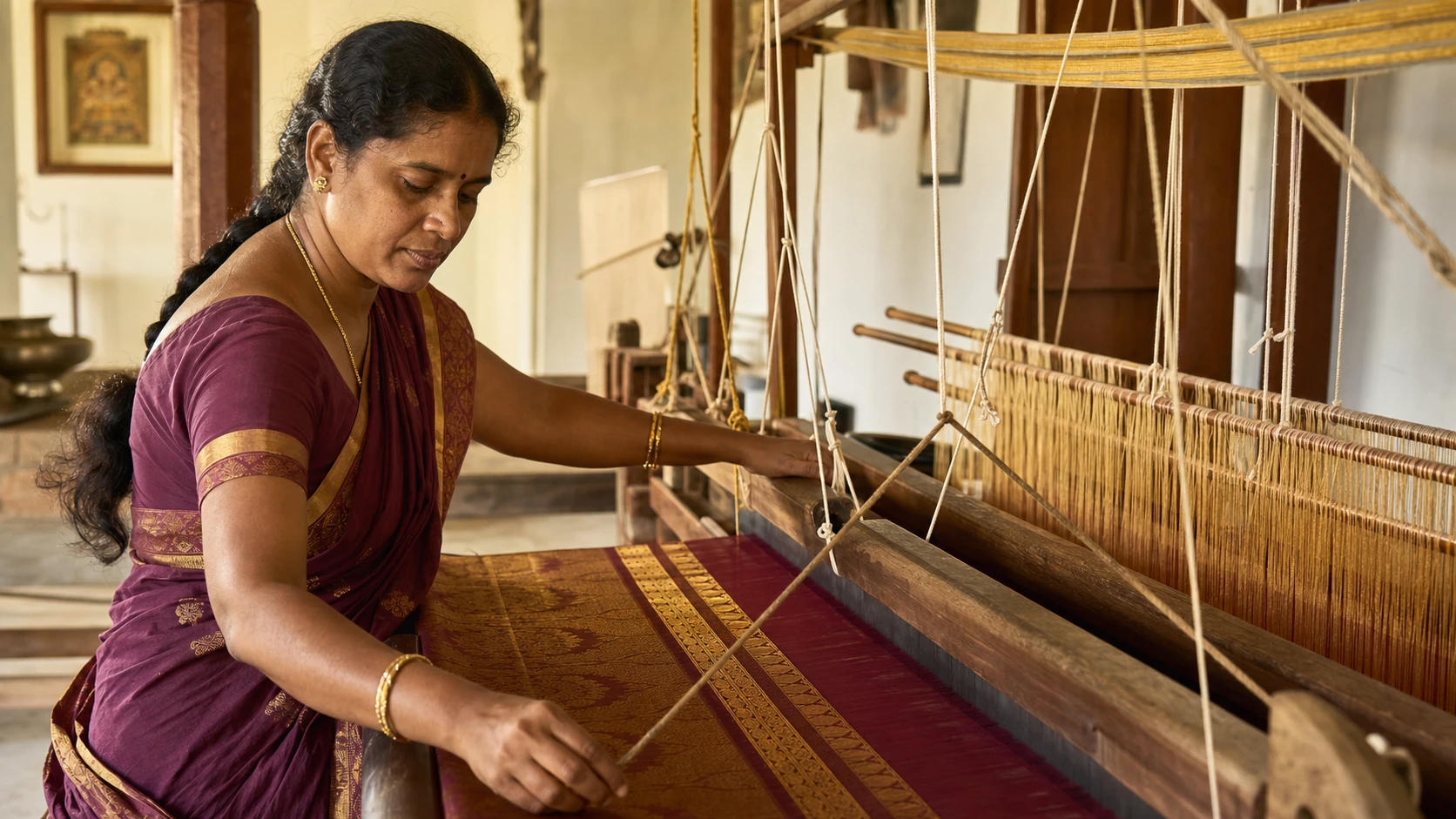
A weaver at a traditional pit loom working gold zari into a silk saree

About Weavers

The hands behind the weave

Every saree we sell begins on a loom, in a tradition older than the country it comes from. These are the crafts, and the regions that keep them alive.

A handloom saree is not so much manufactured as accumulated — thread by thread, over days and sometimes weeks. The techniques below are practised in particular parts of India, each with its own vocabulary of motif, weave and finish. Knowing them is the difference between choosing a colour and choosing a craft.

Weaving traditions

A burgundy Kanchipuram silk saree with a broad gold zari border

Kanchipuram · Tamil Nadu

Kanjivaram silk

Woven from mulberry silk, with zari worked through the border and pallu. Its defining feature is structural: body and border are woven separately and then interlocked, a join known as korvai. That is why the border can carry a contrasting colour without the cloth weakening where the two meet.

The density of the silk is what gives a Kanjivaram its weight, and its particular way of holding a fold.

See silk sarees
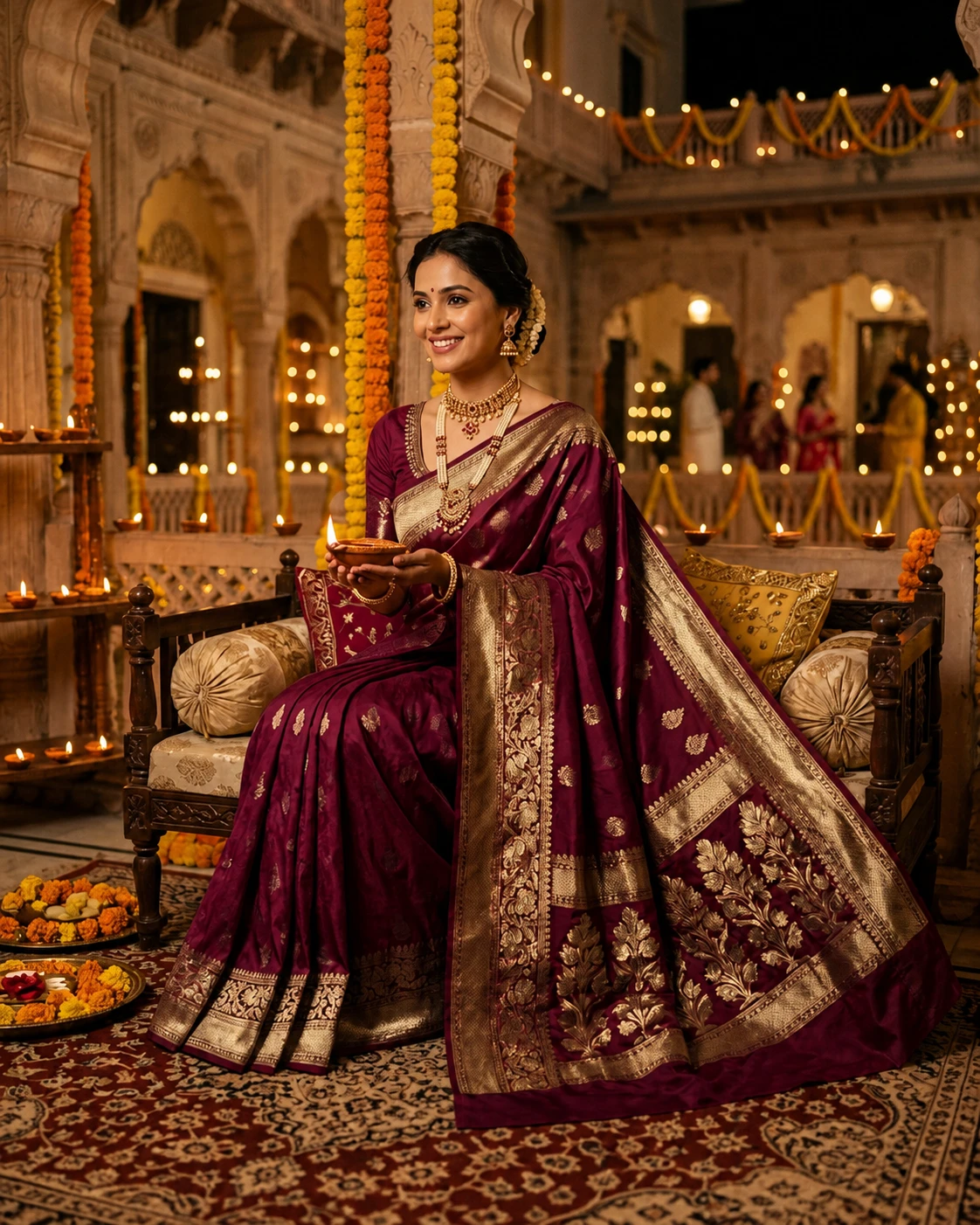
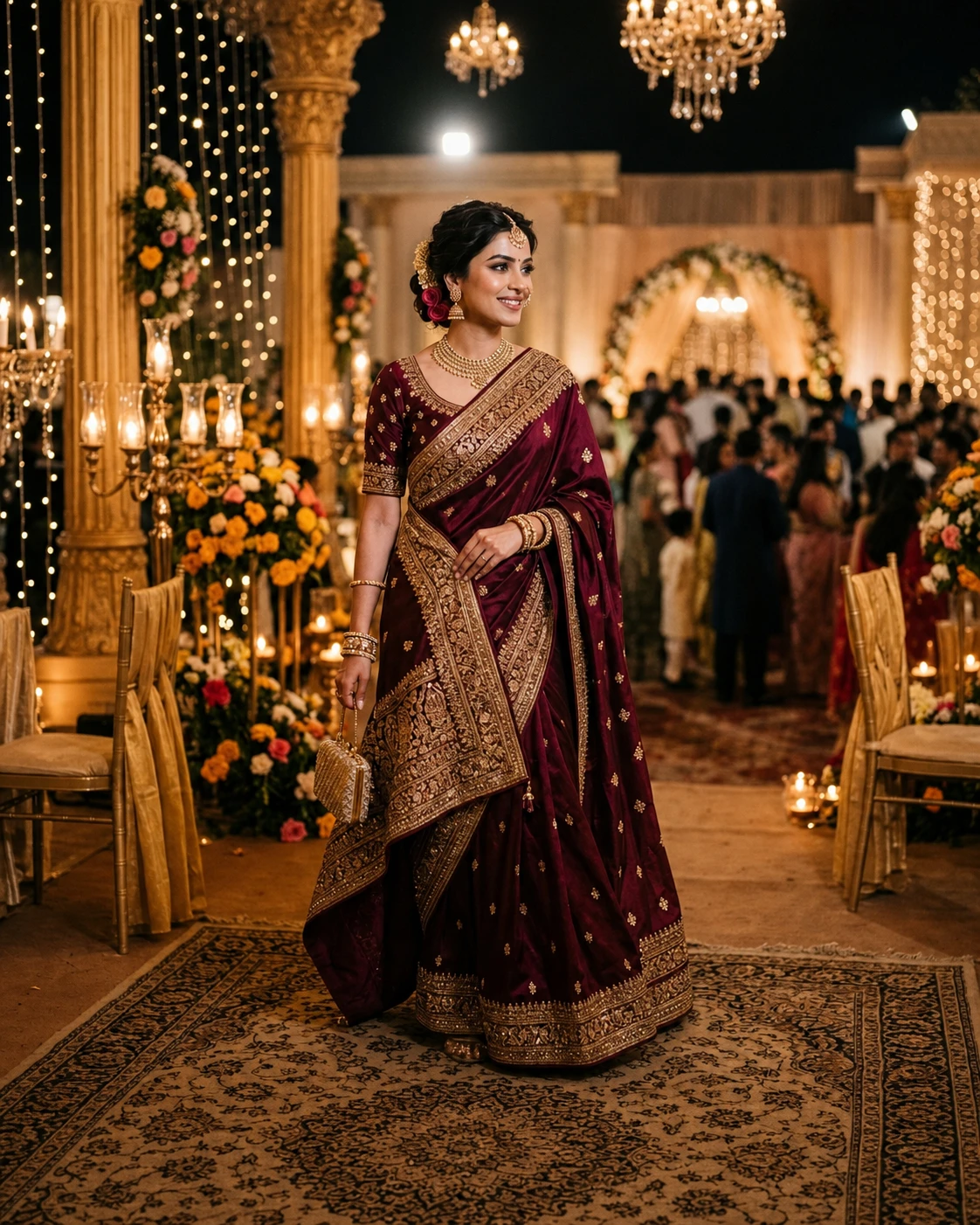
A deep wine Banarasi silk saree with dense gold brocade

Varanasi · Uttar Pradesh

Banarasi brocade

Banarasi weaving carries a visibly Mughal inheritance — scrolling floral vines, paisley, and borders of upright leaves. The brocade is built by carrying supplementary zari threads through the weave itself rather than embroidering them on afterwards, so the pattern belongs to the cloth instead of sitting on top of it.

An intricate Banarasi can occupy a loom for weeks.

See Banarasi sarees
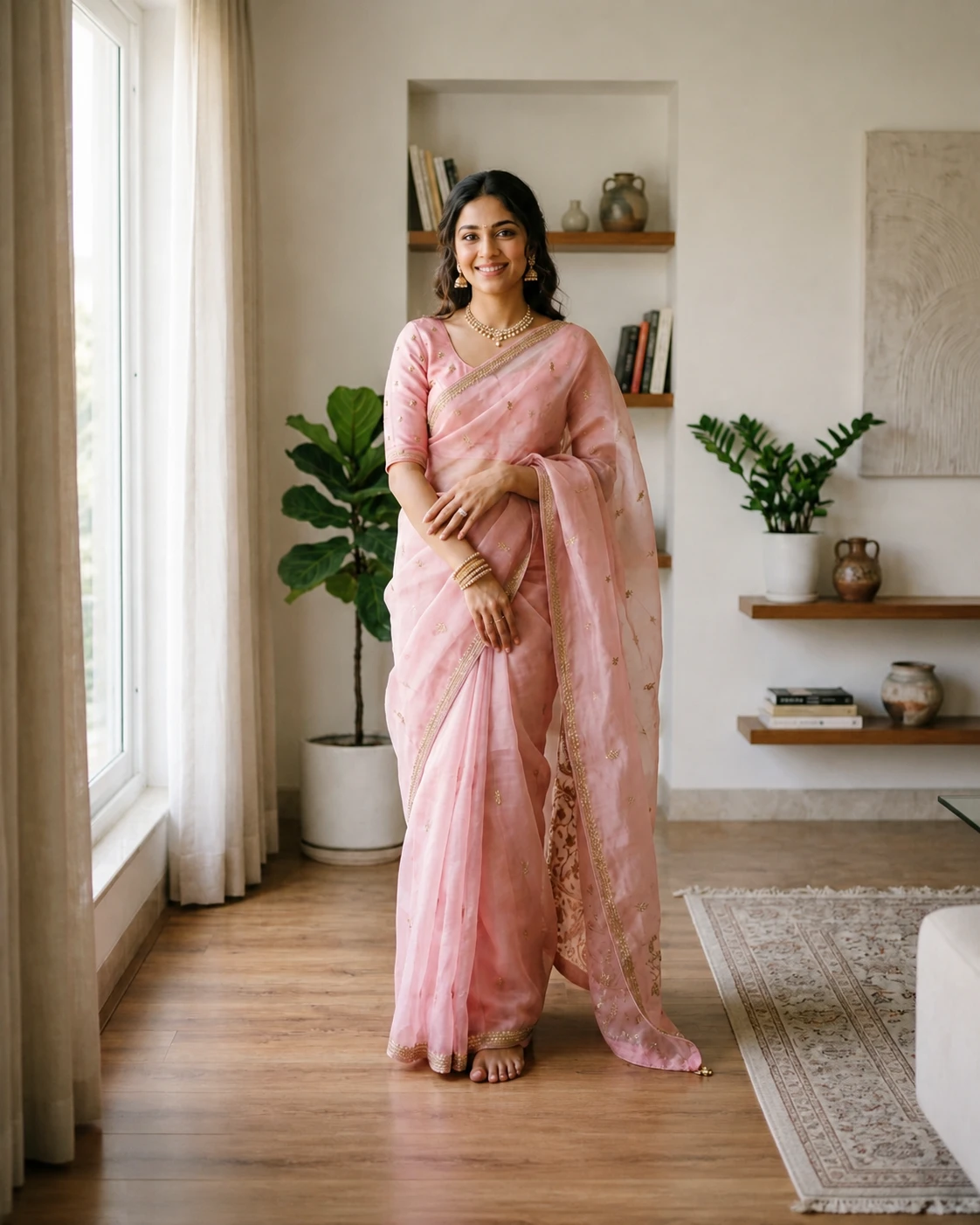
A dusty rose Chanderi saree with a fine, sheer texture

Chanderi · Madhya Pradesh

Chanderi

Chanderi is prized for its transparency. The raw silk is woven without being degummed, which keeps the filament fine and leaves the finished cloth with a glassy sheen and a remarkable lightness — the reason it suits long daytime occasions in warm weather.

See Chanderi sarees
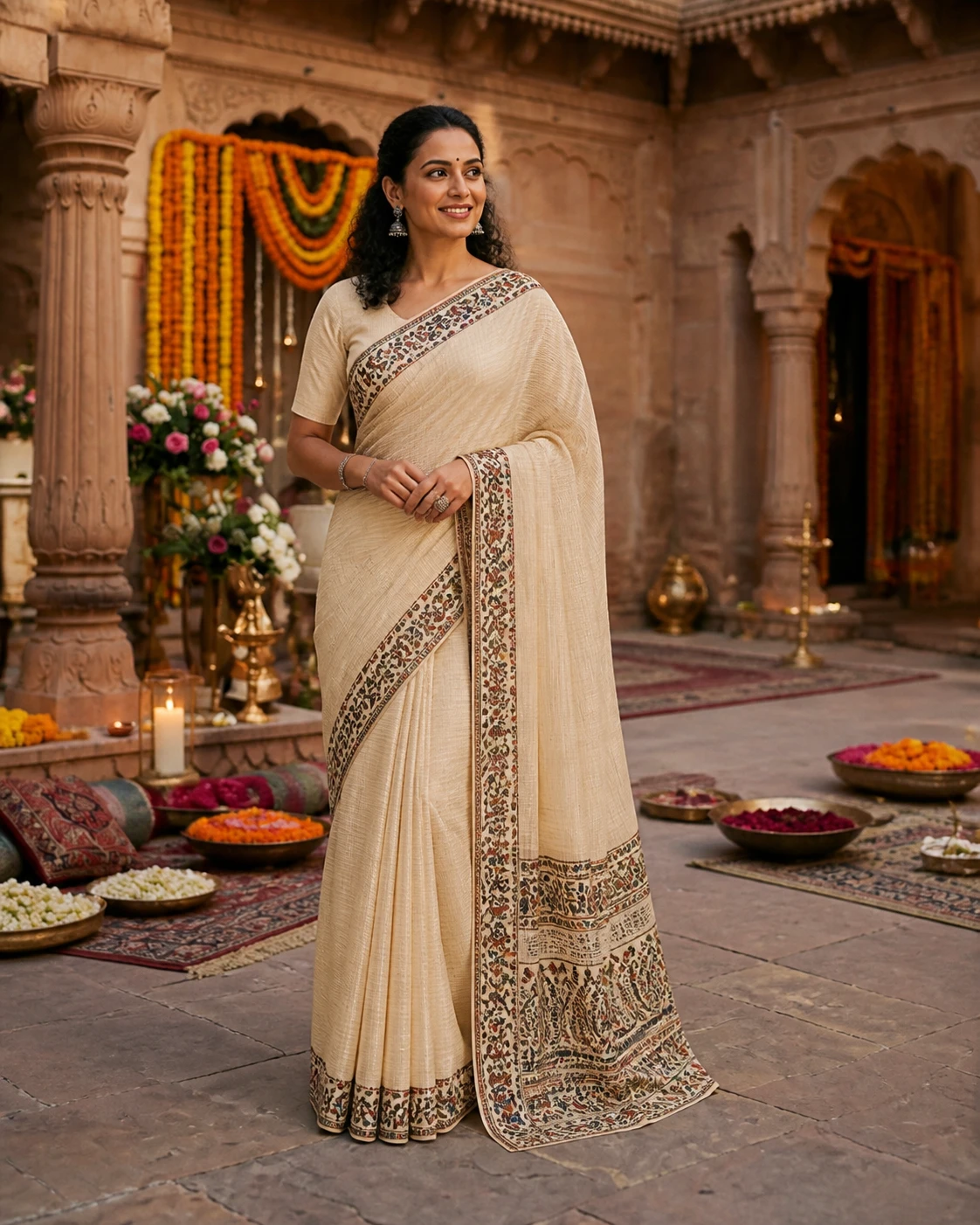
A natural cotton Kalamkari saree with hand block-printed motifs

Andhra Pradesh · Telangana

Kalamkari

The name comes from kalam, a pen. In the Srikalahasti style the design is drawn freehand with a bamboo pen; in Machilipatnam it is built up from carved wooden blocks. Both work in natural dyes, and both involve repeated rounds of treating, printing and washing — the colour is developed through the process rather than applied at the end of it.

See Kalamkari sarees
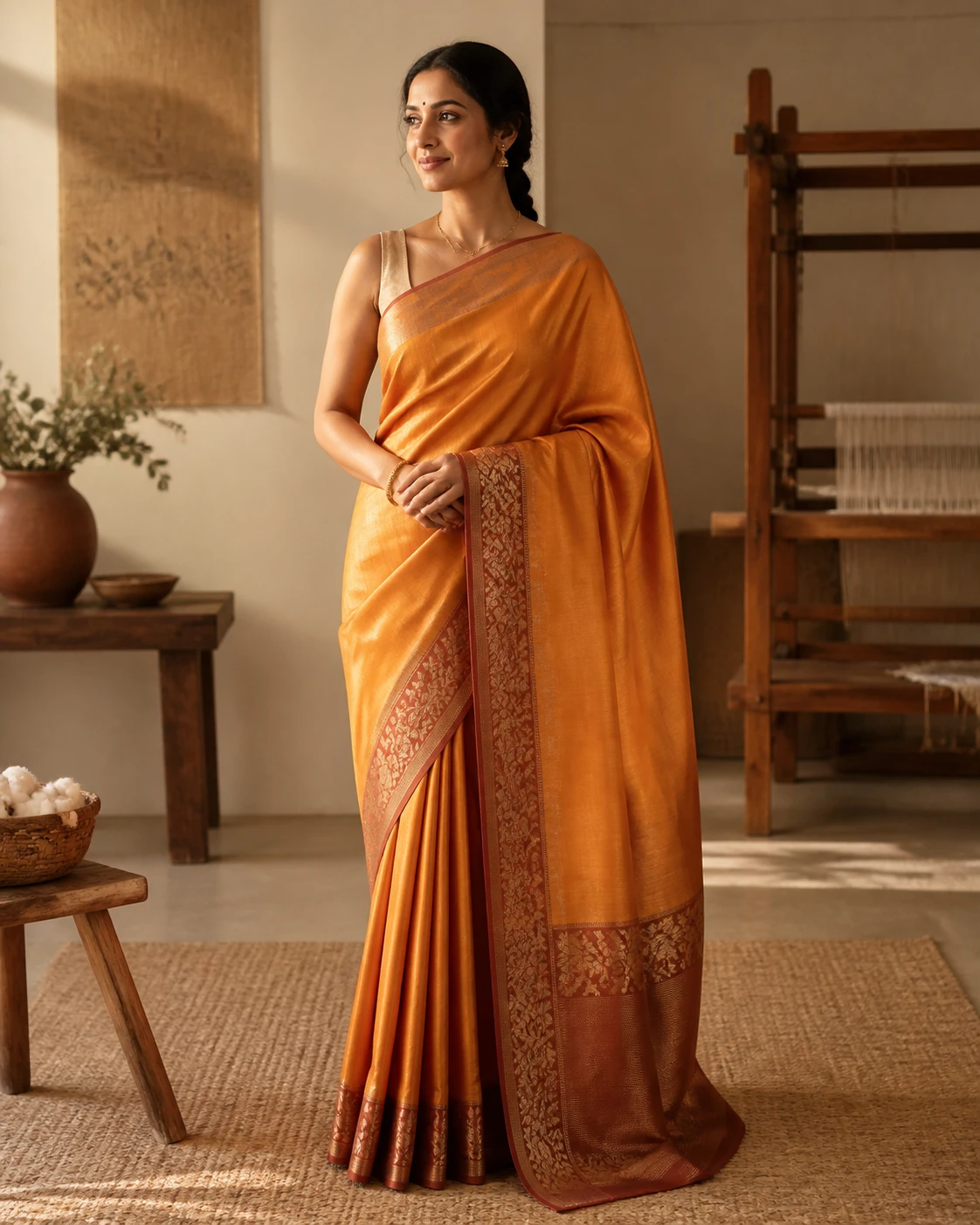
A saffron Tussar silk saree with a natural slubbed texture

Jharkhand · Chhattisgarh · West Bengal

Tussar silk

Tussar is a wild silk, and it behaves quite differently from mulberry: a deeper natural gold, a coarser and more textured hand, and a matte finish that takes earthy dye tones particularly well. The slight irregularity in the yarn is a property of the fibre rather than a fault in the weaving.

See Tussar sarees

From yarn to saree

01

Dyeing the yarn

Silk and cotton are dyed before they ever reach the loom, so the colour runs through the thread rather than sitting on the surface of finished cloth.

02

Warping

Thousands of lengthwise threads are measured, stretched and drawn through the loom by hand. A single misthreaded strand will show along the entire saree.

03

Setting the design

The motif is translated into a punch-card or jacquard sequence, which tells the loom exactly which warp threads to lift on every pass of the shuttle.

04

Weaving

The weft is passed by hand, pass after pass. An elaborate border or pallu can take a skilled weaver several days on its own.

Wear the craft

Every saree in the collection names its weave and its finish, so you know what you are choosing before it reaches you.

Explore the collection