
Culture6 min read
The History of Kanjivaram Silk
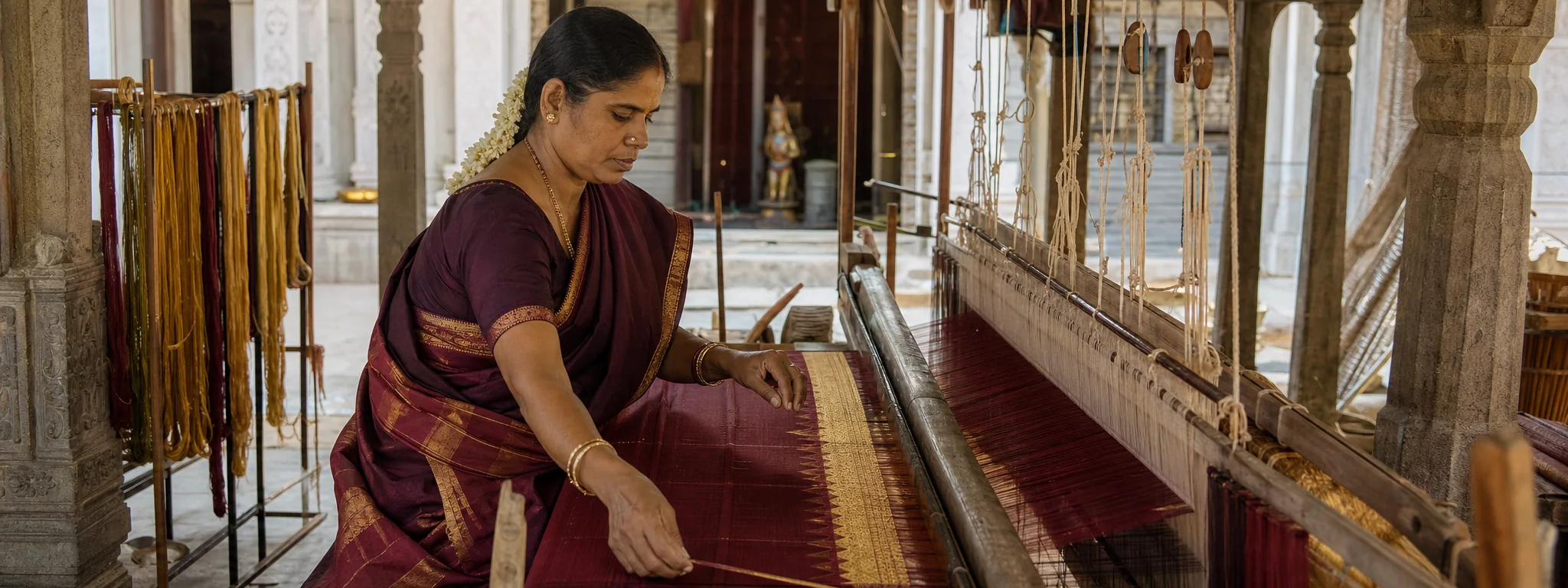
A closer look at the Kanchipuram weaving tradition, its contrasting borders, temple-linked motifs and the korvai and petni techniques that define its visual character.
A regional textile language
Architecture, ritual and silk meet on the loom
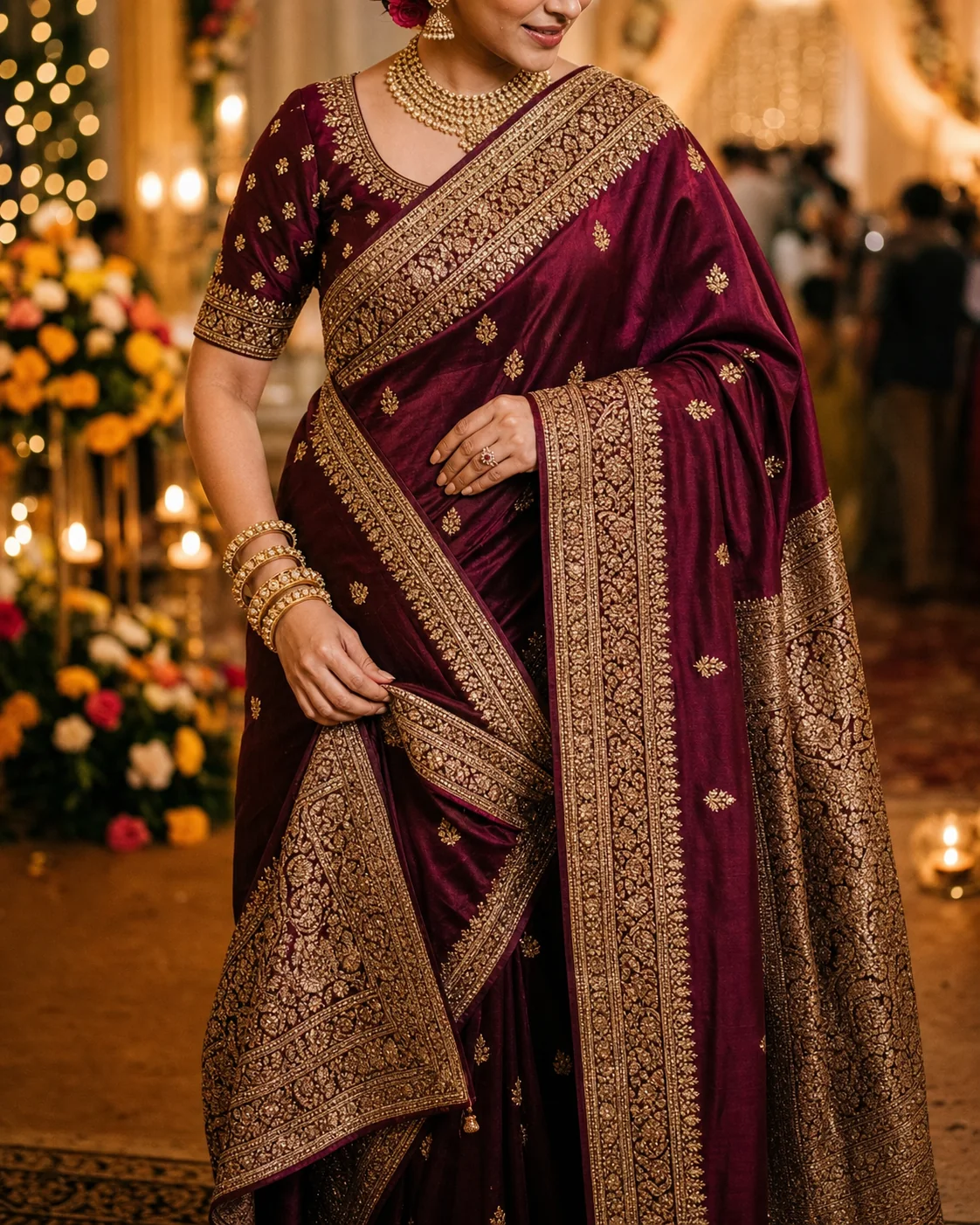
Kanchipuram silk sarees are associated with Kanchipuram in Tamil Nadu and are known for bright colour contrasts, substantial silk, metallic zari and motifs connected with South Indian temple architecture and the natural world.
Government textile references describe motifs such as yali, annam, peacock, elephant and horse forms, alongside geometric and floral designs.
Structure and skill
Korvai and petni create the contrast
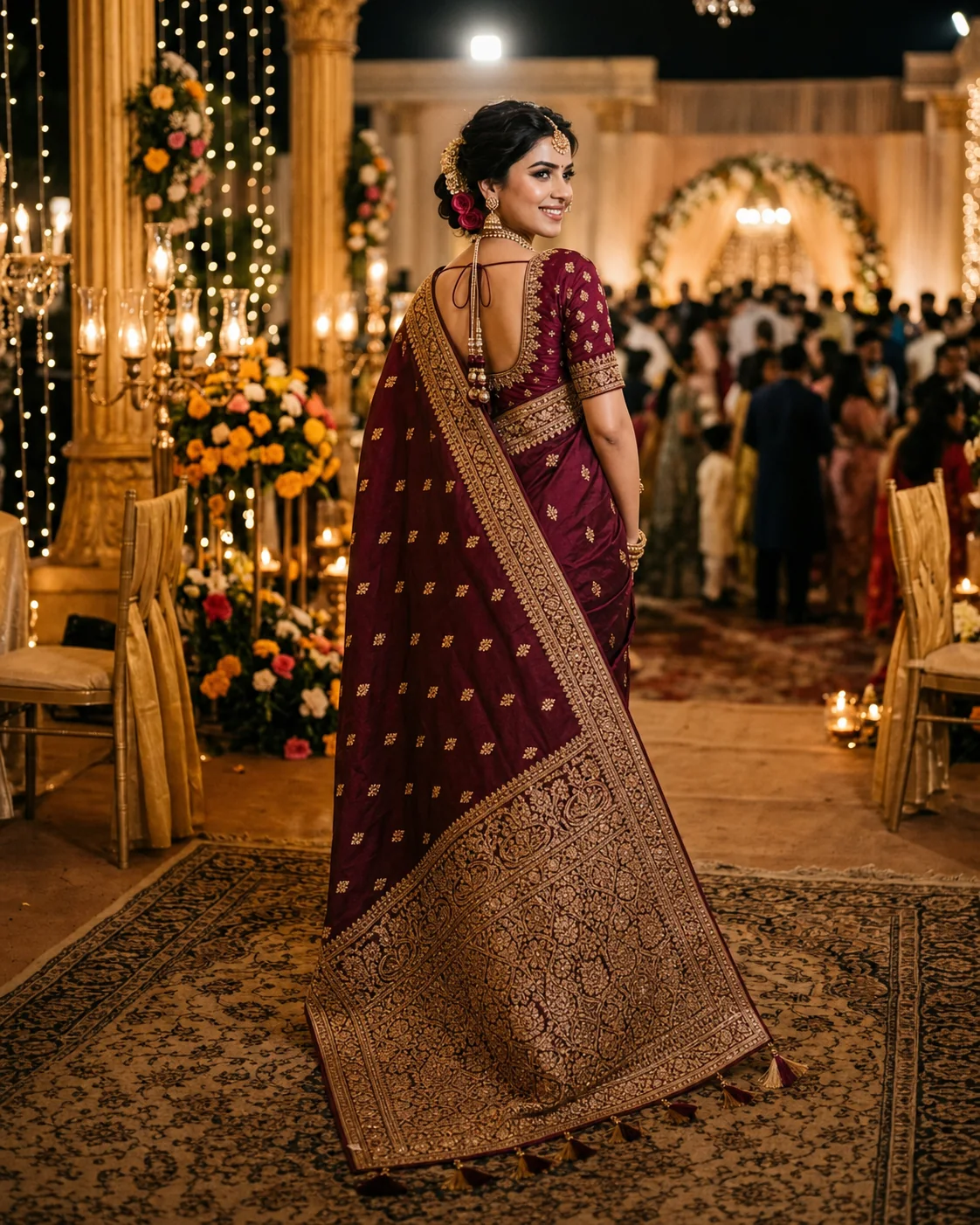
In traditional korvai construction, contrasting body and border sections are interlocked during weaving rather than added as a simple decorative strip. Petni is associated with joining a contrasting pallu to the body.
These techniques help explain the decisive colour blocks and strong visual separation found in many Kanchipuram sarees. Individual sarees still vary, so authenticity should be assessed through reliable provenance and certification rather than appearance alone.
An heirloom is also a record of making
Looking closely at the join, motifs, yarn and pallu reveals the decisions of the weaver. The saree’s beauty lies not only in opulence, but in the structure that carries it.